During times of abundance, fashion is often associated with luxury and self-expression. But during World War II, fashion became something far more fundamental: a testament to resilience, resourcefulness, and creativity.
As governments diverted cotton, wool, silk, and nylon toward the war effort, everyday families faced severe shortages. Clothing was rationed, fabric was scarce, and buying new garments became difficult for millions. Yet necessity, as history repeatedly demonstrates, has a way of inspiring innovation.
One of the most remarkable examples came not from Paris fashion houses, but from ordinary households and the humble flour sack.
From Packaging to Wardrobe
In the early twentieth century, flour, sugar, animal feed, and wheat were commonly packaged in sturdy cotton sacks. Long before recycling became fashionable, thrifty homemakers recognized that these sacks could be repurposed.
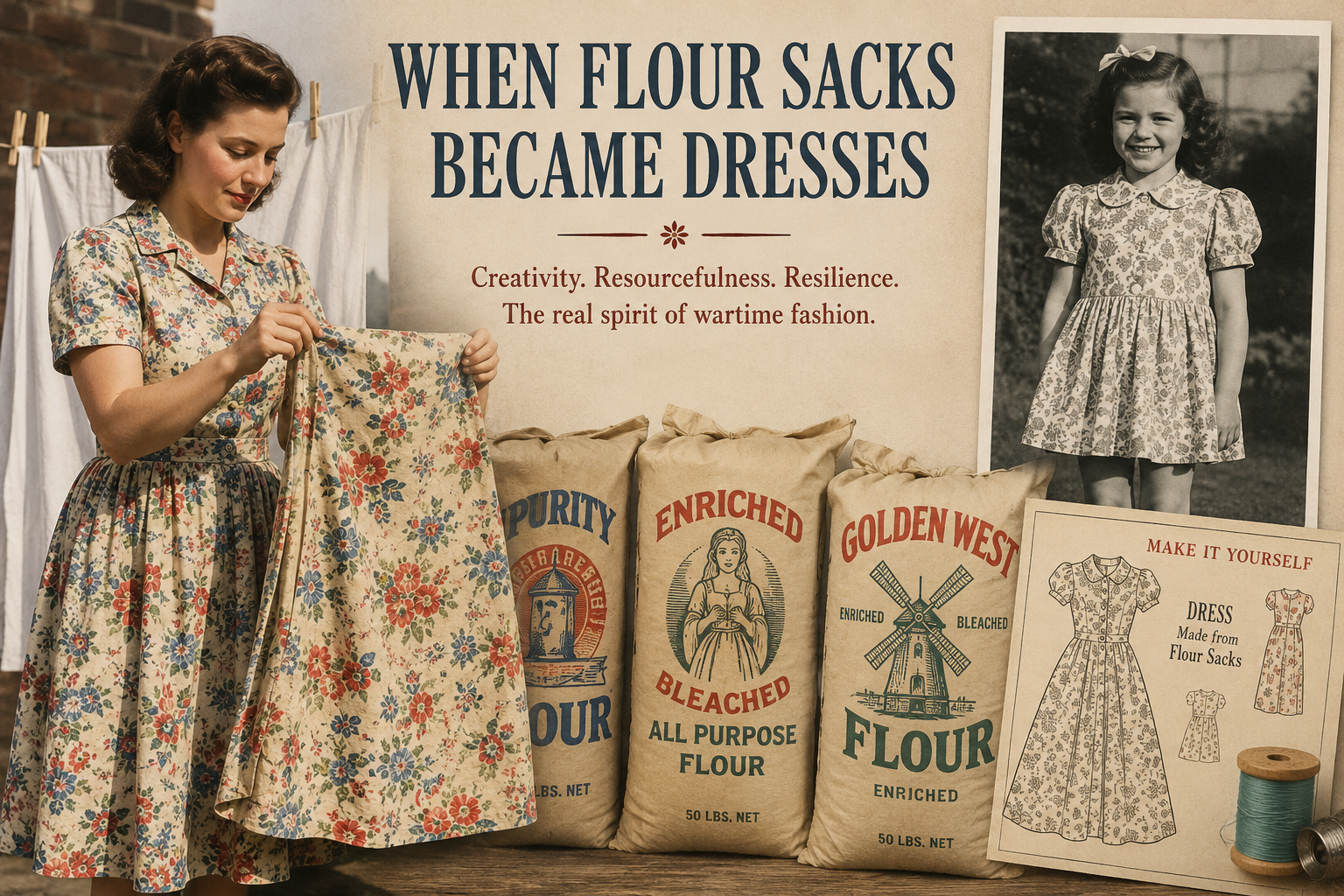
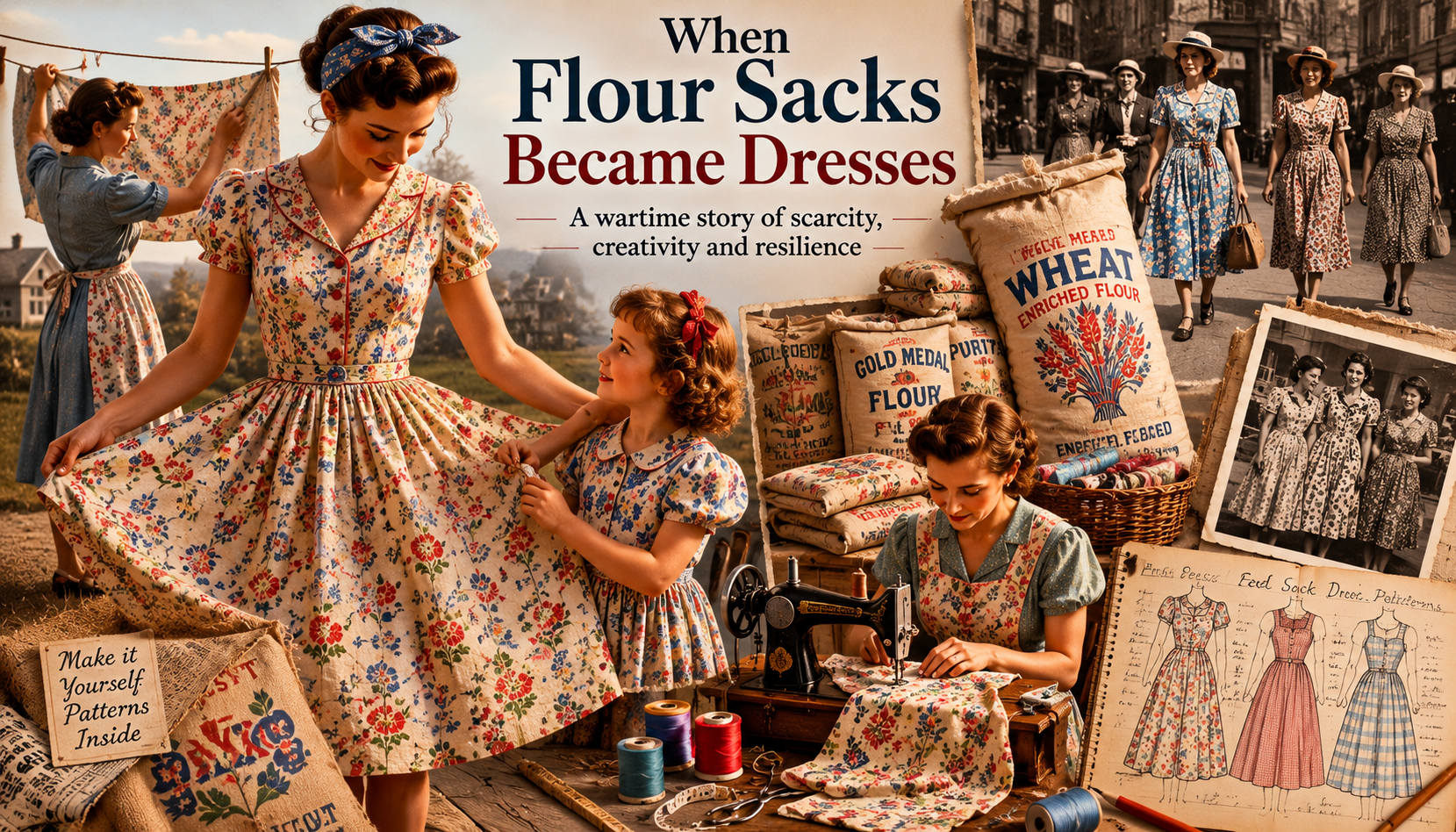
What began as a practical solution soon evolved into a widespread phenomenon. Families washed and bleached the sacks and transformed them into shirts, aprons, children’s clothing, curtains, pillowcases, and even dresses.
In an era defined by scarcity, fabric itself became too valuable to waste.
Merchants Recognized an Opportunity
Manufacturers soon realized something extraordinary. Women were not throwing away the sacks—they were turning them into clothing.
Instead of treating the sacks merely as packaging, companies began printing colorful floral patterns, checks, and decorative designs directly onto the fabric. Some even included sewing instructions and coordinated patterns so that customers could create matching garments.
Merchants understood that design could influence purchasing decisions. A bag of flour with an attractive pattern might be chosen over a competitor’s product, not because of the flour itself, but because of the dress it could eventually become.
In many ways, this represented an early form of lifestyle marketing.
Fashion Beyond Luxury
The feed sack dress became more than a symbol of economic hardship. It reflected the ingenuity of ordinary people and the timeless human desire for beauty.
Even in uncertain times, people wanted color, elegance, and individuality.
Children wore brightly patterned outfits made from grain sacks. Mothers carefully matched fabrics to create dresses for special occasions. Curtains, tablecloths, and shirts were all crafted from materials originally intended to transport food.
Fashion was not suspended during wartime—it adapted.
The Birth of Sustainable Fashion Before Sustainability
Today, sustainability has become one of the fashion industry’s defining conversations. Designers and brands speak of circular economies, recycling, and reducing waste.
Yet decades before these ideas became industry buzzwords, families were already practicing them.
The flour sack dress stands as a reminder that sustainability is not a new invention. It is deeply rooted in human creativity and the ability to find value in what others might discard.
Lessons From the Past
The story of the flour sack dress reveals something larger than fashion itself.
History shows that clothing has always reflected the realities of society. Wars, economic crises, and technological changes leave their imprint not only on governments and industries but also on what people wear.
World War II transformed fashion, but it also revealed a profound truth: beauty and creativity endure, even in difficult times.
Long before fast fashion and digital trends, ordinary families turned necessity into artistry, proving that style is not defined by abundance, but by imagination.
In that sense, the humble flour sack dress remains one of history’s most enduring fashion statements.